Unified Reporting: Eliminating Disparate Tabs in Device Processing
Operations Managers in the secondary mobile market face immense daily pressure to hit high volume targets. Relying on fragmented software systems forces warehouse technicians to constantly jump between different screens. This constant switching destroys daily processing speed and creates massive operational friction.
Implementing unified reporting device processing addresses this warehouse bottleneck directly. By partnering with CellDe, facilities consolidate their entire data architecture into one centralized processing hub, providing the visibility required to achieve sustainable ITAD workflow optimization.
The Cost of Fragmented Software Systems
Why toggling between multiple applications slows down device triage?
When a warehouse technician evaluates a used smartphone, speed dictates facility profitability. If the technician must open one application for grading and another for pricing, the process stalls entirely. Eliminating disparate tabs removes the physical and mental barriers slowing down your workforce.
Every second spent switching software windows compounds across thousands of processed devices daily. This fragmentation degrades floor efficiency and limits daily throughput targets. Toggling between platforms actively prevents operations teams from hitting their daily revenue and throughput targets.
The risk of data loss and manual entry errors
Fragmented software systems heavily rely on technicians manually typing hardware details from one screen to another. This manual data transfer is a massive liability that guarantees human error will occur eventually. A simple typo regarding an IMEI number can render a perfectly good smartphone completely unsellable.
Reducing manual data entry is a non-negotiable requirement for scaling any reverse logistics operation safely. When systems do not speak to each other automatically, critical diagnostic details frequently vanish. These costly mistakes absolutely devastate gross profit margins in the highly competitive secondary market.
How do disconnected systems create operational blind spots?
Without centralized data, Operations Managers cannot accurately track facility performance or identify sudden workflow bottlenecks. If your wiping software does not communicate with your inventory tracker, you are managing your facility blindly. This lack of enterprise inventory visibility prevents leaders from making proactive and profitable business decisions.
Effective decision-making depends on accurate, organized, and easily accessible operational data. When information is fragmented across disconnected systems, it becomes difficult to track performance, identify inefficiencies, and maintain consistent reporting. Integrated data management helps businesses improve visibility, streamline operations, and support more informed strategic planning.
The Solution of Unified Reporting
The Mechanics of a Centralized Processing Hub
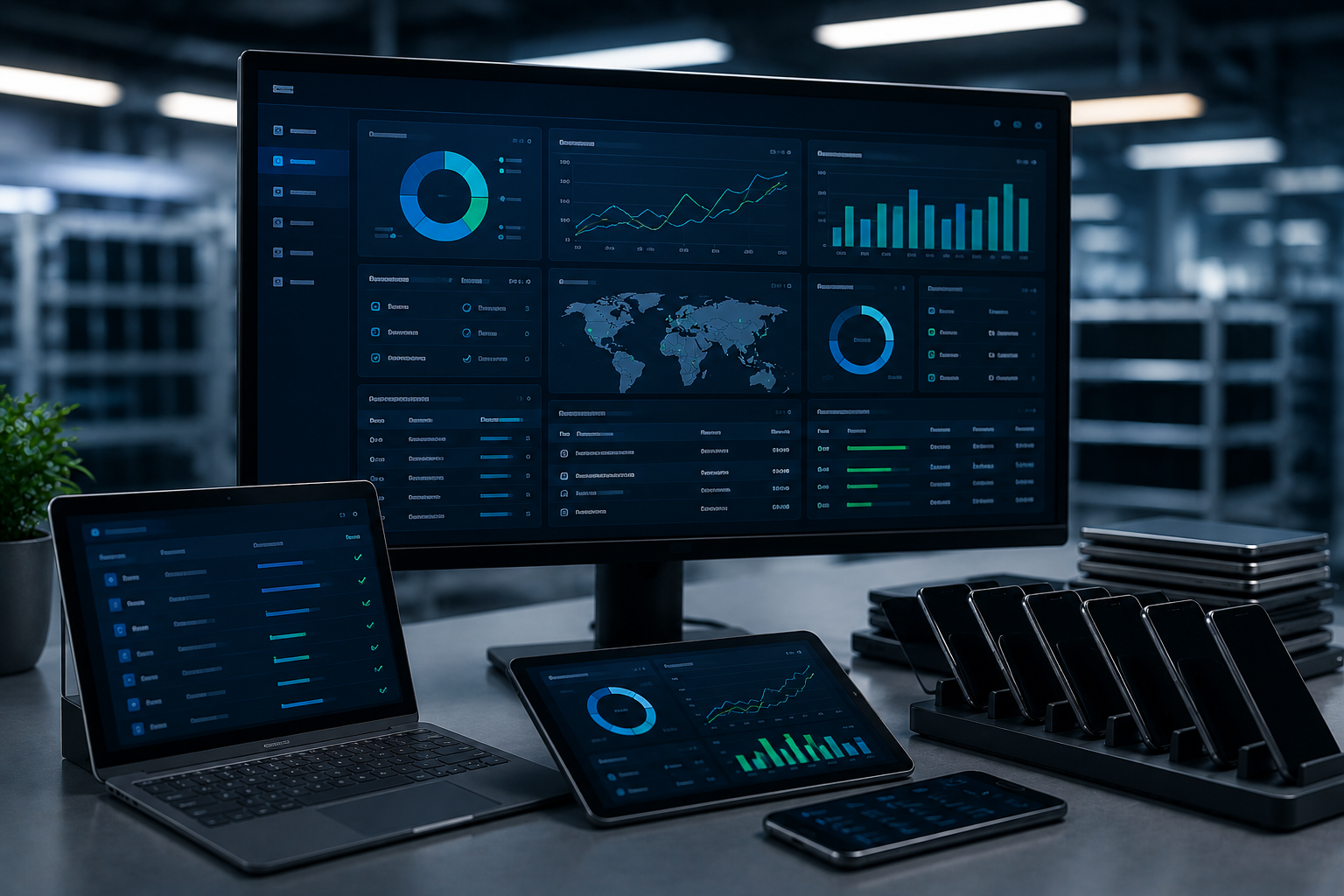
A centralized processing hub integrates multi-source data parameters into a unified dashboard. In device lifecycle management, this means viewing each operational milestone sequentially within one interface. This infrastructure eliminates the operational friction of navigating disparate applications to process a single asset.
By utilizing a unified dashboard, technicians experience a highly streamlined and distraction-free working environment. This direct approach to overcoming software fragmentation drastically accelerates the learning curve for new employees. It provides absolute clarity, ensuring that every operational step is completed in the exact correct sequence.
Aggregating diagnostics data wiping and verification in one hub
Modern processing facilities require powerful B2B telecom SaaS solutions to handle massive daily hardware volumes. The most effective architecture unifies advanced mobile diagnostics, automated data erasure protocols, and specialized transaction management.
Within the CellDe SmartSuite ecosystem, CellDe Smart Trade-In drives this workflow end-to-end, enabling functional evaluation, CellDe Vision Grade AI cosmetic grading using CTIA standards, and certified sanitization to execute simultaneously within a single interface. This aggregation ensures regulatory compliance and comprehensive quality control across the pipeline. By uniting diagnostics and erasure, Operations Managers guarantee absolute compliance and flawless quality control. This aggregation is the absolute foundation of a highly profitable and deeply secure reverse logistics pipeline.
The role of API synchronization in centralizing data
The magic behind a single unified dashboard is robust API data synchronization running quietly in the background. Application Programming Interfaces allow entirely different software modules to share complex data instantly and securely. This technology ensures that when a diagnostic test finishes, the inventory system updates automatically without human input.
This real-time data synchronization removes the need for manual batch file uploads, keeping the database accurate up to the second. APIs provide the underlying infrastructure that makes unified reporting device processing an operational reality.
Operational Benefits for Managers
Increasing daily throughput by streamlining user experience
When you Eliminate disparate tabs, the technician's output speed increases exponentially across the entire facility floor. A unified interface requires fewer clicks, resulting in much faster individual device processing times. This streamlined approach directly allows your current workforce to handle significantly larger daily processing volumes.
Improving the UX and efficiency of the processing software directly combats extreme warehouse technician fatigue. When the software is incredibly easy to use, technicians maintain a much higher pace throughout their entire shift. This directly maximizes facility profitability during intense and highly demanding retail buyback seasons.
Providing real time oversight without interrupting floor staff
Cloud native reporting tools give managers the ability to monitor the entire facility from their office. Operations Managers can watch devices move through the triage pipeline dynamically without ever tapping a technician on the shoulder. This oversight is absolutely critical for managing mobile buyback programs efficiently.
If a specific processing line falls behind, operations managers track the inventory deceleration via CellDe Smart Reports dashboards immediately, reallocating floor technicians based on factual real-time data. They can reallocate resources dynamically to resolve the issue before it impacts daily shipping quotas. This level of centralized control is impossible to achieve with disconnected and isolated legacy software systems.
Simplifying onboarding and training for new technicians
High employee turnover is a notorious and constant challenge in the global reverse logistics industry. Training new hires to use five different specialized applications is incredibly expensive and highly time consuming. A unified software platform drastically reduces this initial training burden for your warehouse management team.
With a single processing hub, new employees only need to master one core system. This simplicity allows them to reach maximum processing speed in a fraction of the standard training time. Streamlined facility operations begin with ensuring your software empowers your workers instead of deeply confusing them.
Transforming Your Facility with Centralized Intelligence
The era of managing complex device processing through fragmented spreadsheets and disconnected web portals is over. To remain competitive, enterprise reverse logistics platforms must demand complete transparency and absolute workflow integration. Consolidating your operations into a unified dashboard layout is the sustainable path forward to preserve capital margin.
Do not let outdated software architecture slow down your corporate growth and damage your bottom line. Upgrade your facility with the most advanced, unified processing tools available on the market today. Contact us to discover how CellDe can permanently revolutionize your operational efficiency.
