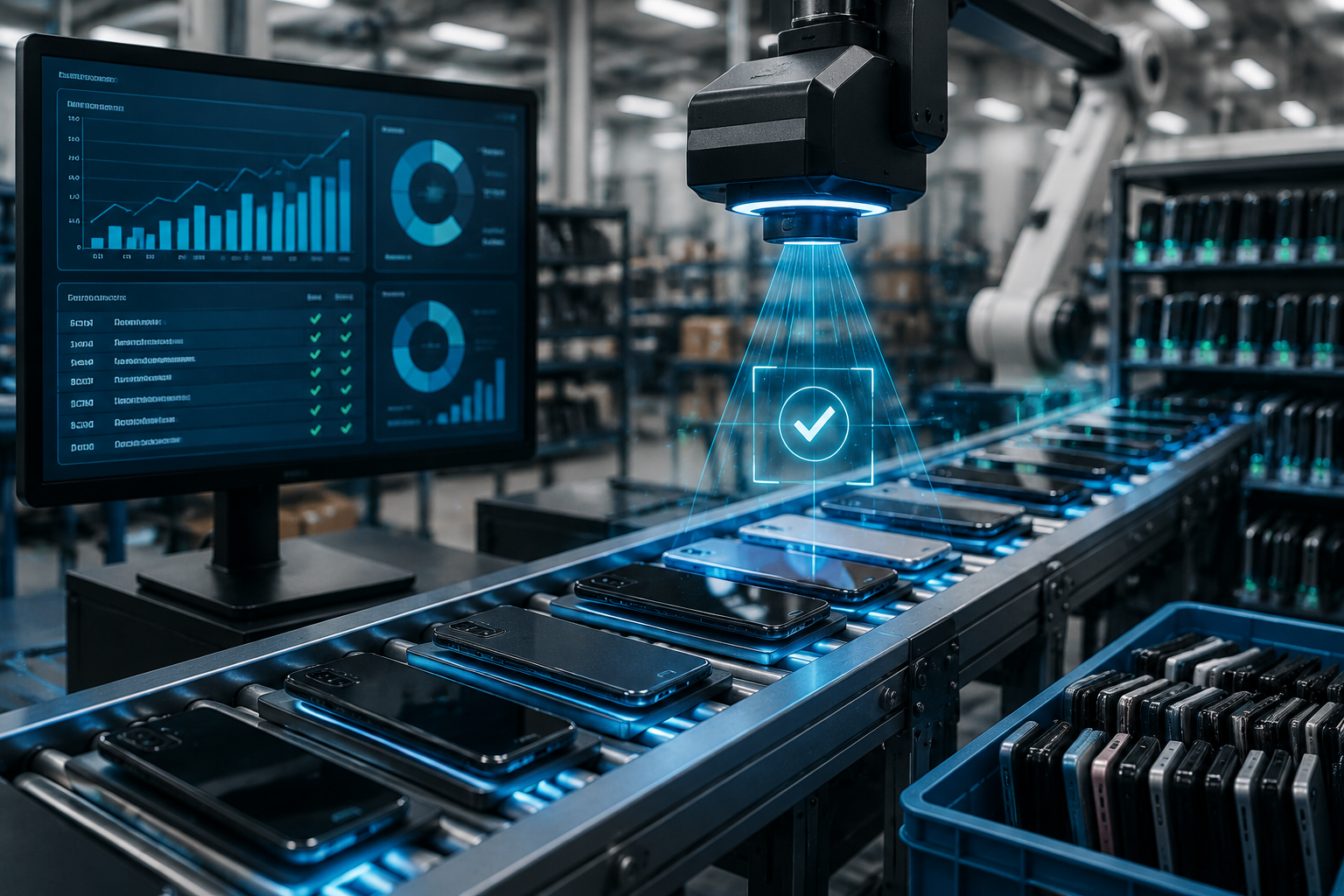
Scaling Mobile Processing Through Automated Device Recognition
High-volume warehouse managers face pressure to process pallets of used smartphones daily. Relying on manual testing and data entry methodologies creates physical bottlenecks on processing floors.
To survive tight market margins, facilities must scale mobile processing utilizing advanced automation. Partnering with CellDe provides the enterprise software required to streamline your logistical facility.
The True Cost of Slow Processing
Warehouse profitability relies on maintaining a continuous flow of hardware inventory. Time wasted during the initial triage phase drains the operational budget. Managers must identify where hardware stops moving to fix the operational pipeline. Eliminating these hidden delays is required to achieve high daily hardware output.
Analyzing the manual data entry bottleneck
Traditional processing forces technicians to manually type serial numbers, check carrier statuses, and log device conditions one by one. This manual methodology artificially caps maximum daily facility output. Spending valuable minutes on manual data entry for a single smartphone impacts the viability of wholesale contracts. This workflow creates a traffic jam at the receiving dock, leaving unprocessed inventory sitting idle.
The impact of slow processing on inventory depreciation
In the highly competitive secondary market, mobile electronics depreciate every single day. Hardware sitting unprocessed on a warehouse rack actively loses potential wholesale value rapidly.
As technology assets age, they can gradually lose value and efficiency over time. Lengthy testing processes can also create delays that tie up inventory, reduce operational flexibility, and slow overall business performance.
Accelerating triage ensures you capture a higher secondary market price, protecting initial hardware investments and improving cash flow.
Calculating wasted labor expenditure in reverse logistics
Labor remains a high variable operating expense in physical processing facilities. Paying technicians to perform redundant manual data entry is a waste of payroll budgets. This inefficiency consumes tight profit margins before a device is sold. Optimizing workforce output is the foundation of a profitable secondary market business.
Financial Impact of Processing Speed
| Metric | Manual Data Entry Workflow | Automated Recognition Workflow |
|---|---|---|
|
Hourly Output |
Limited by typing speed and human error | Accelerated by instant USB data pulls |
| Labor Cost | High per processed unit | Reduced per processed unit |
|
Market Value |
Lost due to inventory stagnation | Maximized through rapid retail deployment |
|
Data Accuracy |
High risk of IMEI typos and database corruption | 100% accuracy via software extraction |
Strategies for Reducing Transaction Time
To successfully scale mobile processing, eliminate manual touchpoints from the workflow. Technicians should act as system operators rather than perform slow data entry tasks. Automated software captures device information instantly, preventing human errors from corrupting the master database.
Eliminating manual data entry with auto-recognition
Forcing workers to physically type alphanumeric IMEI serial numbers risks data corruption. A single typo can render a smartphone untraceable within your inventory system.
Deploying Smart Diagnostics software utilizes automatic device identification immediately upon physical USB connection. The software instantly pulls the serial number, model, and carrier lock status autonomously.
This eliminates all manual keyboard entries, saving precious minutes during the initial device triage phase. It guarantees flawless database accuracy across your entire global enterprise tracking infrastructure simultaneously.
Utilizing barcode scanning for instant inventory tracking
When a pallet arrives, the physical hardware must be digitized into the central management system. Printing and scanning standardized barcode labels accelerates this receiving process. Technicians simply scan the device, and the CellDe Smart Reports cloud database updates the exact physical location instantly. This prevents corporate inventory from becoming lost on the warehouse floor. By leveraging Smart Reports, executives gain live, accurate visibility over global inbound logistics and facility performance.
Consolidating diagnostics, grading, and wiping
Using disconnected software applications for testing and data erasure hurts technician efficiency. Switching between different desktop windows adds minutes to the workflow. Enterprise solutions like SmartSuite consolidate these operations into a single software architecture. Utilizing Smart Diagnostics for initial testing, followed by cosmetic assessment via Vision Grade, and data erasure with Smart Wipe, creates a seamless single-touch workflow within SmartSuite. This unified methodology lowers ITAD labor costs and reduces physical device handling.
Scaling Facility Output with Intelligent Automation
Standardizing triage across global facilities
When diagnostic software automatically pulls device data upon connection, it removes subjective human decision-making from the intake process. This standardization ensures that a device processed in a North American facility is evaluated under the exact same parameters as one in Europe.
Reducing training time for new hires
By relying on automated recognition rather than manual data entry, facilities can scale their workforce quickly during peak seasons. New technicians do not need extensive training on recognizing specific device models or navigating complex carrier lock menus; the software handles the identification process autonomously.
The Parallel Processing Advantage
Operational Phase | Sequential Methodology Limitations | Parallel Architecture Benefits |
Device Connection | Technicians wait idly for screens to load | Techs connect new batches while others run |
Testing Speed | Hard capped at 15 minutes per single unit | Effectively reduced to under 5 minutes per unit |
Floor Space | Requires linear physical desk space | Highly condensed vertical rack hub systems |
Error Handling | A single error stops the entire workflow | Isolated failures do not stop the parallel batch |
Transforming Warehouse Output with Intelligent Software
The global secondary mobile market will continue expanding over the next decade. Facilities relying on manual data entry workflows will struggle to manage this volume. Managing these high-volume influxes seamlessly requires an end-to-end transaction platform like Smart Trade-In to handle everything from intake to final resale. By shifting to automated device recognition, you empower your team to process higher volumes with less physical effort. Contact us today to deploy CellDe’s automated diagnostics and asset management software in your warehouse.
Frequently Asked Questions
A warehouse speeds up processing by eliminating manual data entry and subjective visual inspections. Implementing automated software diagnostics reduces the per-device testing time required by technicians.
Auto-recognition utilizes software to instantly pull the device's IMEI, model, and carrier status the moment it is plugged in via USB, eliminating the typos and data corruption associated with human data entry.
A single-touch workflow integrates functional testing, cosmetic grading (like Vision Grade), and data erasure (like Smart Wipe) into one seamless process, so the technician does not have to switch between different applications.
Consumer electronics lose secondary market value quickly due to technology depreciation. Fast inventory turnover ensures devices are processed and resold before market value drops impact facility profitability.
