Reduce Telecom Wait Times Fast Diagnostics Retail

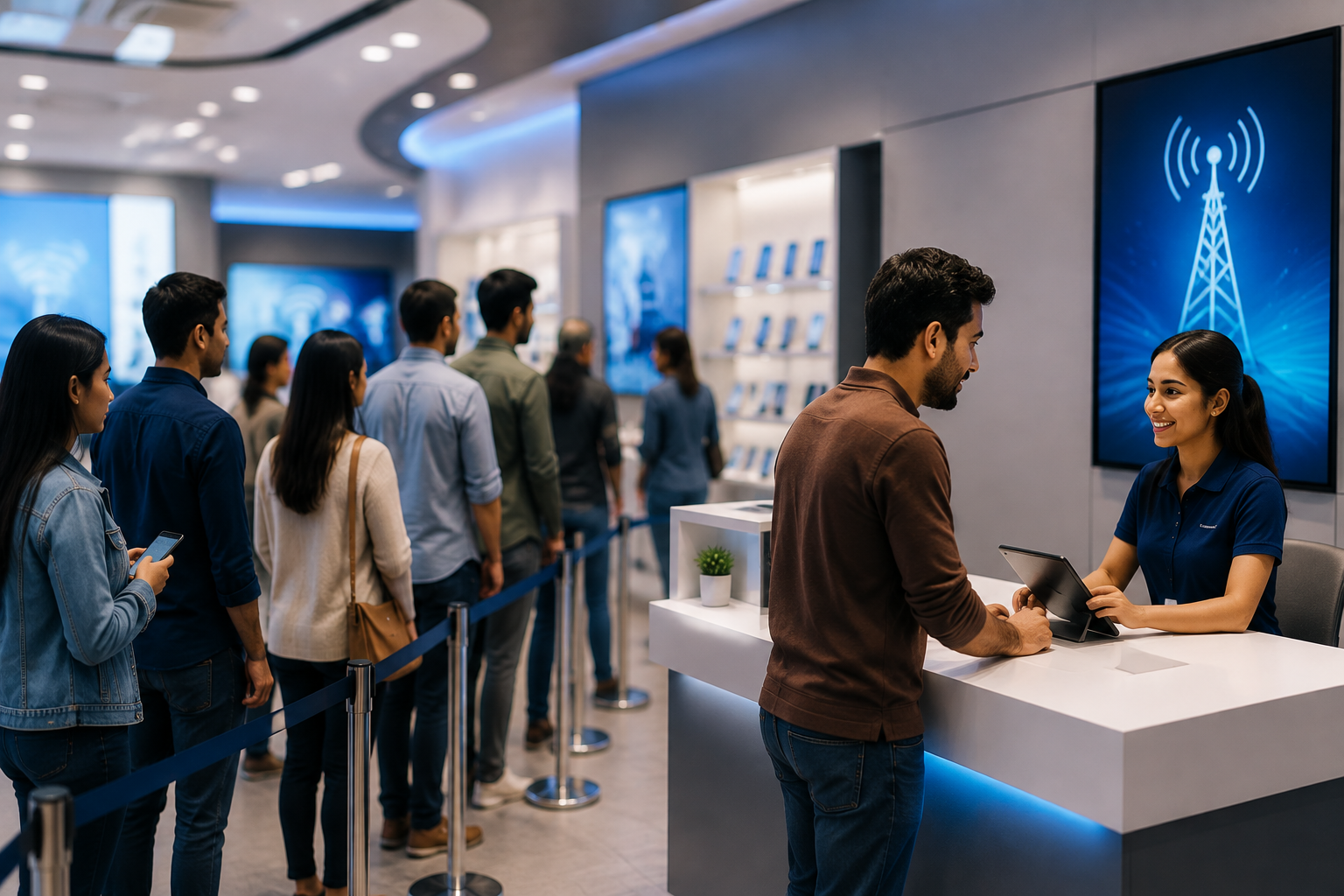
Walk into any busy telecom store on a weekend you will see it: a line of customers standing near the trade-in counter, checking their phones, and slowly losing patience. For store directors and operations leads, this scene is familiar. It is also a quiet but constant drain on revenue.

Trade-in and buyback transactions are often the slowest part of the retail journey. A process that should take a few minutes can stretch to half an hour, and every extra minute adds friction for the customer and pressure on staff. CellDe has spent years studying this exact bottleneck across retail, warehouse, and refurbishment operations.

This blog looks at why wait times spiral out of control in high-volume stores, where the real bottlenecks sit inside the buyback workflow, and how automated trade-in technology brings transactions down to a fraction of the time.

The Hidden Costs of Extended Retail Wait Times

Wait times are not just an inconvenience. They show up directly on the balance sheet, in conversion rates, staff morale, and repeat footfall. Store leaders often underestimate how much a slow counter experience is costing them until they measure it properly. 

 The impact spreads across three areas: lost sales, overworked staff, and customers who quietly walk away and never come back.

How long wait times destroy trade-in conversion rates

A customer who walks in ready to trade in their old device has already decided. Every extra minute they wait gives them time to reconsider, check competitor offers, or simply leave.

Retail counter workflows that rely on manual grading and paperwork stretch this decision window far too long. By the time an offer is ready, the customer's enthusiasm has often faded and so has the sale.

The strain on store associates during peak hours

During high foot traffic hours, associates juggling manual cosmetic checks, IMEI lookups, and data wipes get stretched thin. This slows down every other line at the store, not just the trade-in counter.

Overworked staff also make more errors under pressure, from missed device faults to inconsistent grading. That inconsistency creates disputes with customers and rework for the back office.

Customer walkouts and the loss of brand loyalty

A slow trade-in experience does not just cost one sale. It shapes how a customer feels about the entire brand, and word travels fast when a store gets a reputation for long queues.

Bridging the trust gap in retail means giving customers a fast, transparent process where the offer feels fair and immediate. Without that, loyalty erodes quietly, one frustrated visit at a time.

Implementing High Speed Trade-In Technology

Once the bottlenecks are clear, the fix is not about hiring more staff or building bigger counters. It is about removing the manual steps that were never adding real value in the first place.

This is where Smart Trade-In changes the shape of the entire transaction, from device intake to final approval.

Automating objective diagnostics to eliminate haggling

Rapid smartphone triage using Vision Grade, CellDe's AI-powered cosmetic assessment tool, combined with comprehensive functional testing gives an instant, fair valuation. There is no back-and-forth negotiation because the assessment is consistent every time.

Smart Trade-In also supports app-free device self-assessment, letting customers check their own device condition before they even reach the counter, which speeds up the in-store step further.

Executing instant OEM blacklist and financing checks

B2B mobile diagnostic applications built for retail scale run lost and stolen status checks, blacklist detection, and SIM or memory card status verification in parallel with the cosmetic grading step, not after it.

This kind of device lifecycle management SaaS approach means compliance and valuation happen almost simultaneously, instead of one waiting on the other.

Achieving under 5-minute transaction benchmarks

When cosmetic grading, functional testing, data checks, and compliance verification all run through one connected system, the traditional 30-minute trade-in shrinks to under five minutes.

That single change transforms point of sale efficiency across the entire store, not just at the trade-in counter, because associates are freed up to serve more customers during peak hours.

Why This Matters Beyond the Counter?

Reducing labor cost per device is not only about speed. It is about letting trained staff spend their time on customer conversations and upselling, instead of repetitive manual checks.

Enhancing retail associate productivity in this way has a compounding effect. Fewer manual tasks per transaction means each associate can handle more customers per shift without added stress or errors.

Maximizing trade-in conversion rates through consistency

Customers trust a process that feels transparent and fast. When the valuation is generated instantly and explained clearly, more customers accept the offer instead of walking away to think it over.

Overcoming point of sale friction this way builds a habit: customers start to expect trade-ins to be quick, which encourages more frequent upgrades and repeat visits to the same store.

Bringing the Trade-In Counter Up to Speed

The math is simple once you look at it from an operations lens. Every minute saved at the trade-in counter is a minute given back to serving more customers, closing more sales, and reducing the pressure on frontline staff.

High-volume retail fast diagnostics are not a luxury feature anymore. They are becoming the baseline expectation for any telecom store that wants to protect its conversion rates and its reputation for good service.

The table below summarizes the operational areas most affected when trade-in speed improves.
Operational Area Impact of Slow Trade-In Impact of Fast Trade-In
Store Throughput Long queues form during peak hours Smoother flow across all counters
Staff Workload Associates stretched across multiple manual tasks Associates focus on customer service and sales
Customer Trust Perceived haggling and inconsistent offers Transparent, consistent valuations
Compliance Risk Rushed or skipped verification steps Verification built into every transaction
Device Resale Readiness Data wipe handled as a separate, delayed step Erasure completed within the same workflow

Building a Faster, More Trustworthy Trade-In Counter

Long wait times at the trade-in counter are rarely a staffing problem. They are a workflow problem, built from too many manual, disconnected steps happening one after another instead of together. 

Bringing cosmetic grading, data transfer, compliance checks, and erasure into a single automated flow is what takes a 30-minute process down to under five minutes. That is not just faster service, it is a better experience for every customer standing in line. 

If your stores are still relying on manual grading and separate compliance portals, it may be time to see what a connected trade-in workflow looks like in practice. Contact us to see how SmartSuite fits into your existing retail operations. 

Frequently Asked Questions

A well-run trade-in transaction should take under five minutes from device intake to final offer. Anything longer usually points to manual steps that could be automated, such as cosmetic grading or compliance checks.
Retailers can reduce wait times by automating the slowest parts of the buyback process, especially cosmetic grading, data migration, and blacklist verification, so these steps run in parallel instead of one after another.
Smart Trade-In software combining Vision Grade's AI-powered cosmetic assessment, functional testing, and instant valuation is what typically brings buyback transactions down from thirty minutes to a few minutes.
No, speed and security are not a trade-off here. Automated workflows include certified data erasure as part of the process, so devices are wiped to compliant standards without slowing down the transaction.
Yes, Vision Grade's AI-powered assessment can evaluate screen condition, body wear, and functional faults with more consistency than manual inspection, which also reduces disputes between staff and customers over valuation.
Faster trade-in counters reduce congestion across the entire store, since associates are not tied up on one transaction for too long. This improves service at every counter, not just the buyback desk.
While it delivers the biggest impact in high-volume retail settings, any store handling regular trade-ins benefit from faster, more consistent workflows and reduced manual workload for staff.
Share: