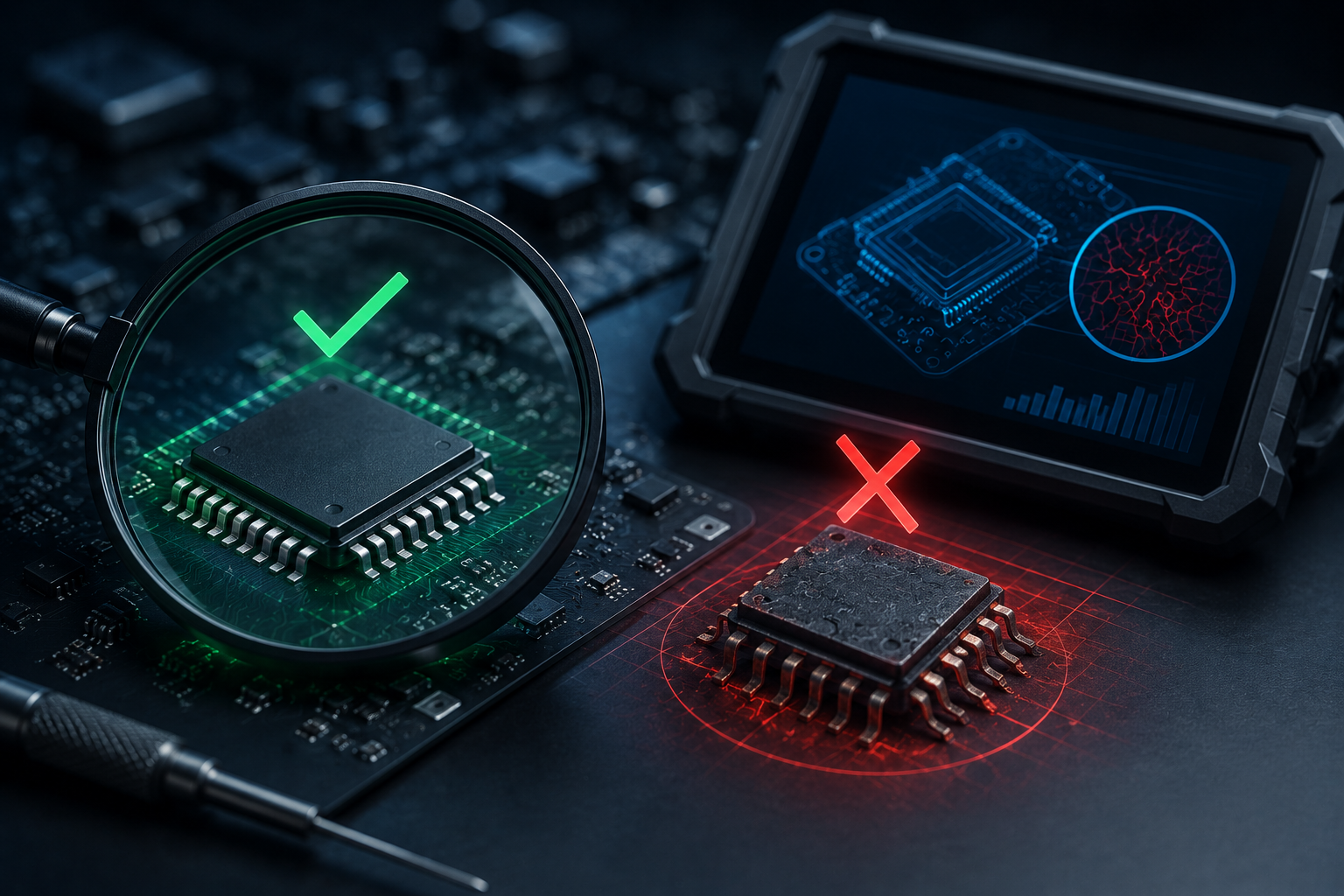
Identifying Counterfeit Components: How Smart Diagnostics Detect Non-OEM Parts
The refurbished electronics market is experiencing massive global growth. However, this expansion brings a hidden danger to businesses processing using smartphones. Unofficial replacement components pose a severe threat to device functionality and consumer safety. To protect their profit margins, refurbishers need highly reliable ways to verify internal hardware instantly. By leveraging the advanced diagnostic software provided by CellDe, businesses can eliminate these blind spots.
Automated systems expose fraudulent components long before they enter your pristine retail inventory. Identifying these fake parts is no longer optional; it is a mandatory survival strategy.
The Rising Tide of Substandard Hardware
Every single year, millions of used devices flow back into the secondary market. Many of these phones previously underwent cheap repairs using unauthorized components. This creates a massive logistical headache for legitimate refurbishing operations worldwide. When a legitimate business buys a used device, they expect original manufacturer quality.
If a phone contains fake hardware, its resale value plummets immediately upon discovery. This scenario is a classic example of repair fraud. Dishonest actors intentionally swap out premium original parts for cheap replicas before selling the phone in bulk.
Refurbishers end up paying premium prices for fundamentally substandard devices. To stop this financial bleed, operations must implement rigorous Counterfeit identification protocols immediately. Relying on basic functionality tests or human intuition is no longer a viable business strategy.
Analyzing Component Authenticity Indicators
Diagnostic Feature | Original Equipment Manufacturer | Counterfeit Component |
System Integration | Perfect cryptographic serial match | Complete serialization communication failure |
Build Materials | Premium engineered alloys and glass | Low grade plastics and highly fragile glass |
Performance Output | Consistent and manufacturer verified | Highly unstable with frequent system crashes |
Safety Compliance | Compliant with rigorous safety laws | Extremely prone to severe thermal failure |
API Driven Component Verification
To expose sophisticated repair fraud, enterprise software utilizes advanced Application Programming Interfaces. These powerful APIs communicate directly with the core operating system of the smartphone. They bypass the standard user interface entirely to read the raw hardware logs. This prevents fake parts from spoofing the main display menu.
When a refurbisher plugs a device into a diagnostic hub, the API runs a comprehensive audit. It checks the proprietary battery health controller and the display driver chipset. If the API detects a sudden anomaly or a missing protocol, it flags the device immediately.
This automated process removes human subjectivity from the grading floor. Software cannot be fooled by a fake manufacturer sticker slapped on a cheap battery. It relies strictly on the unalterable binary data provided by the device architecture itself.
Securing Your Diagnostic Ecosystem
Implementing a robust diagnostic framework requires highly specialized enterprise grade tools. Small scale applications simply cannot handle the massive volume required by major processing centers. You need a platform that integrates seamlessly into your existing warehouse workflows.
By deploying advanced solutions like SmartSuite, businesses gain total control over their hardware audits. This platform automates the entire testing procedure across multiple workstations simultaneously. It ensures consistency in every single diagnostic report your facility generates.
Standardized reporting through CellDe Smart Reports allows warehouse management to track the exact quality of incoming inventory. This centralized data visibility is essential for scaling a refurbishing operation safely, turning raw intake data into highly actionable and profitable business intelligence.
Operational Benefits of Automated Hardware Checks
Workflow Area | Traditional Process Vulnerability | Automated Diagnostic Benefit |
Quality Control | High rate of undetected fake screens | Internal hardware transparency |
Supplier Relations | Blind acceptance of bulk shipments | Data driven vendor dispute resolution |
Customer Satisfaction | Increased returns due to poor battery life | Verified premium hardware retail sales |
Labor Efficiency | Slow manual testing causes bottlenecks | Rapid simultaneous batch processing |
The Critical Link Between Diagnostics and Erasure
Hardware verification is only one half of the entire asset processing equation. Once a device is confirmed authentically, it must be sanitized of all user data. Leaving old data on a device is just as dangerous as selling a fake battery. Both scenarios lead to catastrophic legal liabilities.
For complete operational security, diagnostic workflows must include certified data destruction. Utilizing professional wiping software like Smart Wipe guarantees total data eradication. This critical step is mandatory before any phone can be safely resold.
Combining hardware checks with cryptographic wiping creates an optimized processing pipeline. The device is verified as physically authentic and certified as digitally secure. This dual layered approach significantly increases the final market value of the refurbished asset.
Navigating the Complexity of Modern Displays
Screen replacements are by far the most common form of smartphone repair globally. Consequently, they are the largest source of repair fraud in the entire industry. Fake screens often lack critical features like True Tone display, accurate color matching, and high refresh rates.
Consumers immediately notice when a display feels sluggish or looks washed out. Smart diagnostics test the specific display drivers to confirm original factory functionality and ensure the screen communicates perfectly with the main graphic processor. Once internal display integrity is verified, CellDe Vision Grade seamlessly assigns the external cosmetic grade using global CTIA standards and a guided 6-angle photo upload workflow to remove all visual subjectivity.
This level of deep testing is impossible to replicate manually. The software forces the display to run specific algorithmic diagnostic patterns. It instantly detects the minute visual flaws inherent in cheap third-party manufacturing.
Validating Battery Health and Authenticity
Batteries chemically degrade over time, making them a frequent target for unauthorized replacement. A counterfeit battery might show a perfect health score on a basic user's menu. However, these fake metrics are specifically programmed to deceive casual buyers and manual testers.
Advanced API checks read the true cycle count directly from the internal battery management system. They bypass the fake data presented to the standard user interface. This ensures the refurbisher knows the exact chemical age of the internal power cell.
If the battery is a cheap replica, the software flags the complete lack of proprietary protocols. This protects the business from selling a phone that will die unexpectedly in transit. It guarantees that the end consumer receives a genuinely safe and reliable product.
Securing Your Refurbishing Operations Forward
Relying on manual testing is an increasingly unreliable approach in the modern era. The extreme complexity of smartphone hardware demands sophisticated software solutions. You must permanently integrate API-driven diagnostics into your standard warehouse intake procedures.
To fortify your warehouse and guarantee the authenticity of every device you process, partner with the experts. Integrating these diagnostics with CellDe Smart Trade-In ensures that fully authenticated, securely wiped devices move instantly into global resale channels to maximize yield. Connect with us to secure your inventory and to protect your business's bottom line.
